


Outdoor tablecloths: what really sets them apart from indoor tablecloths?


With the arrival of warmer weather, dining tables are increasingly moved outdoors for lunches and dinners in the garden, on the terrace, porch, or balcony. However, the requirements are not the same as for a table set in the dining room: sun, wind, different surfaces, and heavy use call for outdoor tablecloths designed with greater attention to durability and practicality. Understanding what sets an indoor tablecloth apart from an outdoor one helps you avoid short-lived purchases and, whenever possible, choose a “hybrid” tablecloth that works well both indoors and outdoors, without compromising on the quality of natural fabrics.
Outdoor Tablecloth vs. Indoor Tablecloth: Different Needs for the Same Table
Indoors, the tablecloth primarily complements the furnishings, lighting, and style of the room: the drape of the fabric, its texture, and how it harmonizes with plates, chairs, and accessories matter greatly. An indoor linen tablecloth can be chosen primarily for aesthetics and comfort, as its use is more controlled and protected.
Outdoors, the situation changes: an outdoor tablecloth must withstand direct sunlight, potential humidity, uneven surfaces, and meals that are often more informal but “more intense” (barbecues, sauces, and cold drinks that might spill). This means a higher risk of stains, more friction with chairs and the table, and, above all, more frequent washing throughout the summer.
Outdoor tablecloths must therefore strike a balance between aesthetics and durability, maintaining a beautiful presence on the table while also better withstanding wear, friction, and changes in light and temperature.

What materials are suitable for outdoor and indoor tablecloths?
Indoor tablecloths primarily feature natural fabrics such as linen, cotton, or linen/cotton blends, chosen for their pleasant feel, breathability, and ability to create an elegant and welcoming table setting. Linen, in particular, is appreciated for its slightly textured appearance and the natural elegance with which it drapes over the table.
In the world of outdoor tablecloths, however, technical materials are widely available: polyester, resin-coated fabrics, waxed fabrics, or PVC, often marketed as stain-resistant or water-repellent. Resin-coated tablecloths offer good weather resistance and are easy to clean, but they provide a different tactile and visual experience compared to natural fabrics—less warm and less “textile-like.” If you love the feel of linen or cotton even in the garden, you can use a tablecloth made of natural fabric as an outdoor tablecloth, especially in covered areas (porches, pergolas, covered terraces). In this case, it’s important to choose appropriate weights and high-quality fabrics that can withstand frequent washing and, with the right care, will last overtime without losing their beauty.
How to choose a durable garden tablecloth?
Sunlight is one of the key factors that distinguishes an indoor tablecloth from an outdoor one. Synthetic and technical fabrics generally withstand prolonged exposure to UV rays better, while natural fabrics tend to fade more easily if left outdoors for extended periods. For this reason, when using linen or cotton outdoors, it is best not to leave the tablecloth on the table all the time, but to store it after use to protect it and extend its lifespan.
Use is also more intense: outdoors, it’s easy for wine, oil, sauces, or fruit to spill onto the outdoor tablecloth, and the fabric is subjected to greater friction. Plastic-coated or resin-treated fabrics offer a surface barrier that makes stain removal easier; with linen and cotton, it’s important to act quickly and schedule more frequent washes, choosing appropriate cycles that don’t put too much strain on the fabric.
The washing frequency of a garden tablecloth during peak season can be significantly higher than that of a tablecloth used only in the dining room. When choosing outdoor tablecloths made of natural fabric, it’s a good idea to have at least two pieces to rotate. This way, the fabric has time to “rest” between washes, and you can always keep your table looking neat and ready for the next outdoor meal.

Indoor tablecloth, outdoor tablecloth… or a “bridge” tablecloth?
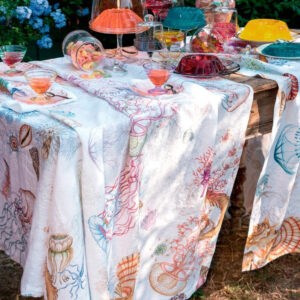
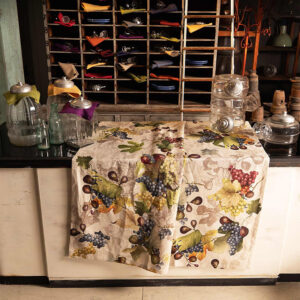
When the transition between indoor and outdoor living is more fluid, however, it may be worth considering a “bridge” tablecloth—that is, one that works well both in the dining room and in the garden or under a porch. In this case, a high-quality natural fabric, such as linen or a linen/cotton blend with a balanced weight, can ensure both comfort and durability, especially if the outdoor table is partially sheltered. A good indoor-outdoor tablecloth should have:
- a natural fabric with sufficient body, not too thin;
- a color or pattern that complements both the indoor decor and the greenery or outdoor materials (wood, stone, iron);
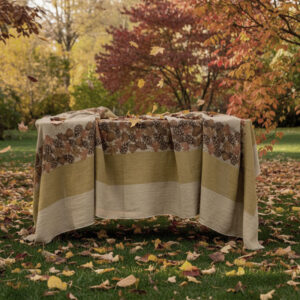
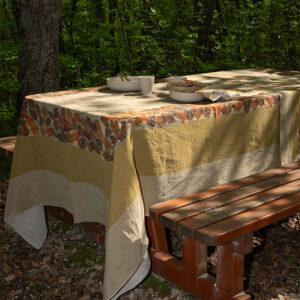
- a size designed with both settings in mind, perhaps with a slightly shorter drop when the table is set outdoors, to prevent the fabric from touching the ground or being blown about too much by the wind.


How to Choose the Right Size for an Outdoor Tablecloth
The size affects the dining experience differently indoors and outdoors. Indoors, an overhang of 25–30 cm on each side is often ideal for achieving an elegant and proportionate drape, with a full and enveloping visual effect.
Outdoors, however, a slightly shorter overhang is usually preferable to reduce the risk of the tablecloth dragging on the ground, collecting more dirt, or being blown up by the wind. For outdoor tablecloths, an overhang of about 20–25 cm on each side often strikes a good balance between aesthetics and practicality: the tablecloth drapes the table harmoniously but allows guests to move freely, without getting caught on legs or chairs. The calculation method remains the same:
TABLE SIZE + (OVERHANG × 2) = TABLECLOTH SIZE
varying only the amount of fabric you want to drape over the edge depending on the setting.
Garden tables often have unusual dimensions, are extendable, or feature non-standard shapes. In these cases, precisely determining the length, width (or diameter), and height of the tabletop helps you choose an outdoor tablecloth that is neither too short nor excessively long. If you also want to use the same tablecloth both indoors and outdoors, it’s worth considering the size by imagining both scenarios, so that the drape is consistent in all situations.
When choosing a garden tablecloth made of natural fabric, or a “bridge” tablecloth that works well both in the dining room and under a porch or on a terrace, you can browse the tableware collection at La Bottega di Casa, where you’ll find linen, cotton, and blended fabrics designed to enhance your summer table with floral prints, botanical motifs, and solid colors that are easy to coordinate